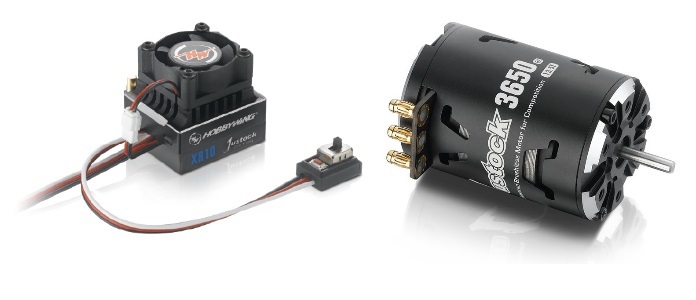
Choosing ESC and motor for Short Course -2018 Edit*
Choosing a electronic speed controller(ESC) and motor for your short course (SC) truck can be challenging and its not always clear what is the best for you. There is plenty to choose from so we will go through the basics of choosing the right equipment.
The biggest factors here is the wanted speed and power but also the drive train and car affects what is good and what is bad.
2WD 1/10th
This is car that has the least requirements. Its easy on the ESC and any 60A controller can handle even 5 turn motors on this quite easily. Just make sure you have the right size pinion so the motor does not overheat. Any standard 540 size motor will fit.
- 8.5t or 10.5t is good for racing and bashing. By adjusting timing and pinions you can get even 50% more speed.
- 17.5t not so fast its great for beginners or younger drivers. LAter on timing can be added to reach higher top speeds, but the bottom stays still manageable.
- 5t-8.5t bashers dream, when you want too much power choose a motor that is under 8.5t
Remember that driving for extended periods or in rough terrain such as sandpits can damage your equipment, always make sure it runs cool enough. Its easy to check once in a while, if you can keep your thumb on the motor there is nothing to worry about. If its hot and you do not want to keep your thumb on the motor you are closing the limit. If you burn your finger its too hot :)
EZ-Runs are also splash proof and hold water and sand much better away from the electronics, they will last much longer in demanding environment. They are however not sensored so racers prefer to run sensored combos.
This requires much more of the controller due to the drive train being less efficient. a good rule of thumb is that any 120A 1/10th controller or a 1/8th controler will be enough. Also some cars tend to be very heavy just like the 1/8th cars
For motors there is 3 type of motors to choose from. 540, 550 and 4 pole size. The 550 is just a longer 540 motor, they tend to heat a lot and are not that great for longer periods of driving. Mostly used by racers who only drive 5 minutes at a time. The 4 pole pro4 motors are excellent for this class, they have more torque and can take a beating even if the car is heavier.
Racers should prefer to have 1/10th controllers such as the Hobbywing XR10 Pro paired with a 540 size or pole 4 motor. The 540 size is ok in 2.5kg cars such as the Hobao or TeamC, but heavy cars (3.5kg) like the Losi or Tekno a 4 pole motor is a much better investment. The 1/10th controllers requires you to have the gearing and adjustments done properly and the measurement of temperatures. Also make sure you do not have any problems with your drive train such as a broken ball bearing. The controllers will hold fine just as you know what you are doing.
The Hobbywing XR8 SCT controller is a perfect match for anyone who likes to bash and drive for longer periods of time. The controller is a down sized 1/8th controller and it can take upto 4s of power and will have no problem powering your Losi or Tekno with a 4 pole motor in the sand pits with paddle tyres. Its also a good controller for a 1/8th off-road buggy converted to electric.
540 sized motors:
6.5t for racers
8.5-13.5t for beginers to keep speeds down
550t
Can not really recommend any, 4 poles are always better
4 pole
3400kv racing on smaller or indoor tracks
4000kv for racers and bashers
4700kv for bashers, its too much for race tracks
All products listed as “in stock” are in our warehouse and ready to be shipped within the next day. Exceptions to this are pre-orders and possible, but unlikely, errors in stock numbers. All products include the VAT according to the destination country. Prices are subject to change without prior notice.
Customer service speed
We are answering emails everyday from the morning to the late evening, no matter if its Sunday or Christmas eve. We work in the EET time zone which is +2h from GMT. During the day our customer service is usually really fast and in the evening we are little slower due we have less people to answer questions. Easier things are usually handled within the hour and shipping related things we try to handle during the day so they can be shipped out the same day. Our goal is to answer all emails within 24h no matter how difficult the question is. The fastest way to get customer service is always to send us a email. Please include relevant pictures and a structured email with proper sentences so we can answer you faster. Take your time and read trough your email once before you send it to us.
Payment Methods and Shipment Information
We ship globally for example to Austria, Belgium, Bulgaria, Cyprus, Czech Republic, Denmark, Estonia, Finland, France, Germany, Greece, Hungary, Ireland, Italy, Latvia, Lithuania, Luxembourg, Malta, Netherlands, Poland, Portugal, Romania,Slovakia, Slovenia, Spain, Sweden and United Kingdom, Norway, Turkey, Switzerland). And many other countries, just go to the checkout and see if you can checkout. If not just let us know and we will quote you a price as we are able to ship to any country in the world.
We accept Paypal, credit card payments, Apple Pay and IBAN/BIC (SEPA) bank transfers.
Payment service
Our credit card and web bank services are delivered by Finnish Paytrail Oyj.
All payments are made in Euros. You can however browse the shop in other currency but the price then is not final. You will see the final Euro price in your shopping basket when paying for the product. The price is shown in “5. Send Order” part of the checkout form.
VAT
Our shop automaticaly includes or excludes VAT percentage from the prices by the destination country. You can change the destination country from the checkout pages before you order. All our customers will pay the same price no matter the included VAT percentage. Companies who are buying with VAT numbers can buy products with exluded VAT according to destination country.
Shipping options
You can browse all our shipping options with out registering. Just add the products you are interested in and proceed to checkout page where you can see all the shipping options and estimated delivery times.
Basic tracked shipping starts from 6,90€ (GLS road freight) in European Union countries.
Estimate Shipping times with GLS.
An international GLS parcel is delivered to neighbouring states of Finland like Sweden or the Baltic countries in a standard delivery time of 24 to 72 hours. To more distant European countries the international parcel dispatch takes between three and six working days, to remote areas up to eight days. Rough estimate is 1 week from order to delivery.
• DHL Express and UPS Express are our fastest delivery options. Both options can reach almost anyplace in EU in 1 day, but some places take 2 days.
• Depending what kind of products you want to order the shop will let you choose from available shipping options.
• Both Options are also Door To Door Services. The Courier will deliver the parcel to your door. But they also have pickup points where they might drop your package off so you can pick it up when it suits you.
When you are checking out your order you can see a more precise estimate of each shipping option to your country.
Refund policy
We accept returns of new, unused merchandise within 14 days from the delivery. Please contact us at [email protected] to receive return information. The customer is responsible for any return costs unless otherwise agreed to with our customer service. We try to return the money with the same payment method that was used to pay for the order, if its not possible we make a wiretransfer. You can also request a gift card if you are making a new order to speed up the process.
We also accept returns after 14 days upto 50days, but we refund them with a giftcard to our shop so you can replace them with any products we sell. Please contact our customer service for details.
After we receive the merchandise and verify its re-sellable condition, we will refund the money or give you a giftcard. Depending on the item this will take 1-3 days after we have received the item. If there is a delay we will contact you.
Please note that all parcels that are returned to us because customer has not picked it up / accepted it or paid customs fees of it will processed. Handling and shipping costs will be reduced from the refunds.
Note! Every return made without notice via email will be charged with handling fee of 20€. Handling fee will be reduced from the total refund.
Damaged Shipment
In the rare occurrence that the shipment has been damaged, please take pictures and send those to our customer service [email protected] immediately and we will make sure we get you sorted and back to enjoying our hobby. Also notify the courier bringing you the shipment that it has been damaged.
Defective parts and Warranty Issues
If you feel that your product is defective please send us a email and we will let you know what to do next. Most items do not have a warranty as they will break in normal usage. For example if you hit something solid or take a larger tumble. Properly used items should easily last 3-12 months and during this period we are able to replace broken items if they have a manufacturing or material fault. We have years of experience with different makes and they all have different warranty policies. We have chosen to work with brands that have a good understanding how to serve their customers and you can be assured that you will get the best customer experience possible with us.
We do not replace or exchange products that are not defective or broken by improper use or have not been maintained. But we do help and teach you how to do things properly so you do not break anything in the future, just email us and we will help you out. We are however unable to wrench for you, its part of the hobby so its important that you will learn that part also your self, we have great tools to sell you so just ask us what you need. Note! Many manufacturers are strickt that electronics are not allowed to be modified (connectors changed etc.) without disabling the warranty. Remember to check this from your products manual.
Don’t worry you are safe with us! Most of our customers feel that they get excellent service in the rare occurrence that they encounter a problem with the product they have bought.
And remember if you run in to a problem or you feel that there is a problem with arrived products do not hesitate to contact us. We are here to help and we do our best to sort it out as soon as possible.
What happens if EuroRC made a error in the shipment?
We ship a lot of orders each day and rarely there are errors. We do however try to minimize the effect on the customer. Please contact us immediately if we have made an error and we will make it right.
Address for returns
Always contact us before returning any product, we can not take responsibility for shipments that are sent without prior notice. Its very important that we can tell you how to mark the parcel so it will be processed in a timely fashion.